Reader Story · 9 min read
I hadn’t slept through the night in four years.
A 3,000-year-old root changed it in 30 days.
A composite first-person account of why testers stopped trying to fix the 3am wake-up — and what finally worked. Spoiler: not melatonin. Not magnesium. Not another meditation app.

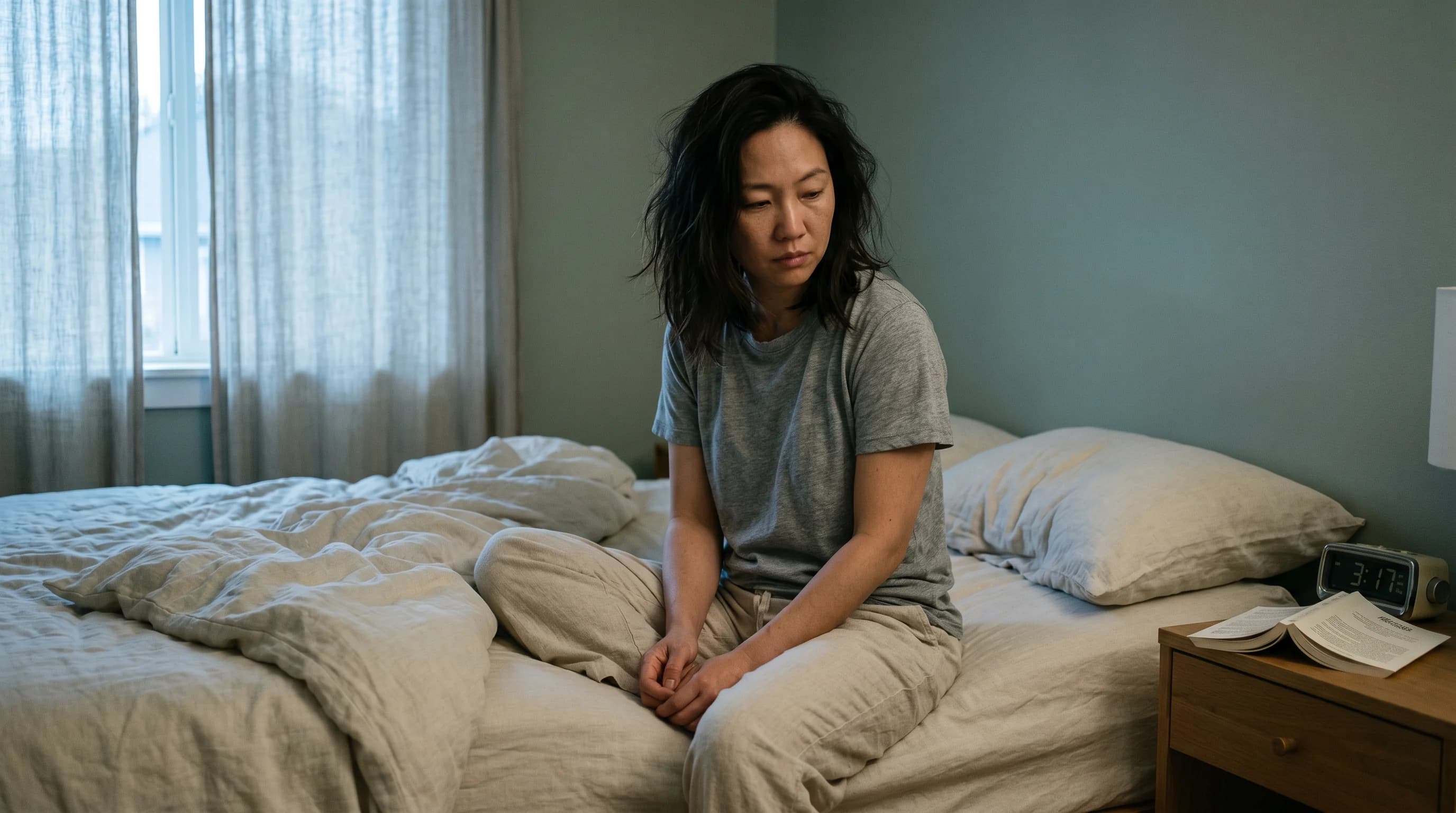
It’s 3:17am. My jaw is clenched. My eyes are open. Somewhere on the other side of the wall my four-year-old is breathing the way only sleeping children breathe, and I am replaying — for the third time — a Slack message I sent at 6pm yesterday that probably read fine, and probably didn’t need a follow-up, and which I am about to compose a follow-up to in my head until 6:30am.
This was a Tuesday. It was also every Tuesday. And every Monday. And the back half of Sunday, because by then I’d already be lying in bed running through the week ahead. I’m 36. I have a job I worked nine years to get. Two kids. A husband who has noticed that I cry in my car in the Whole Foods parking lot on Fridays.
By every visible measure, I am fine. But I hadn’t slept through a night in four years.
Here’s what I tried first.
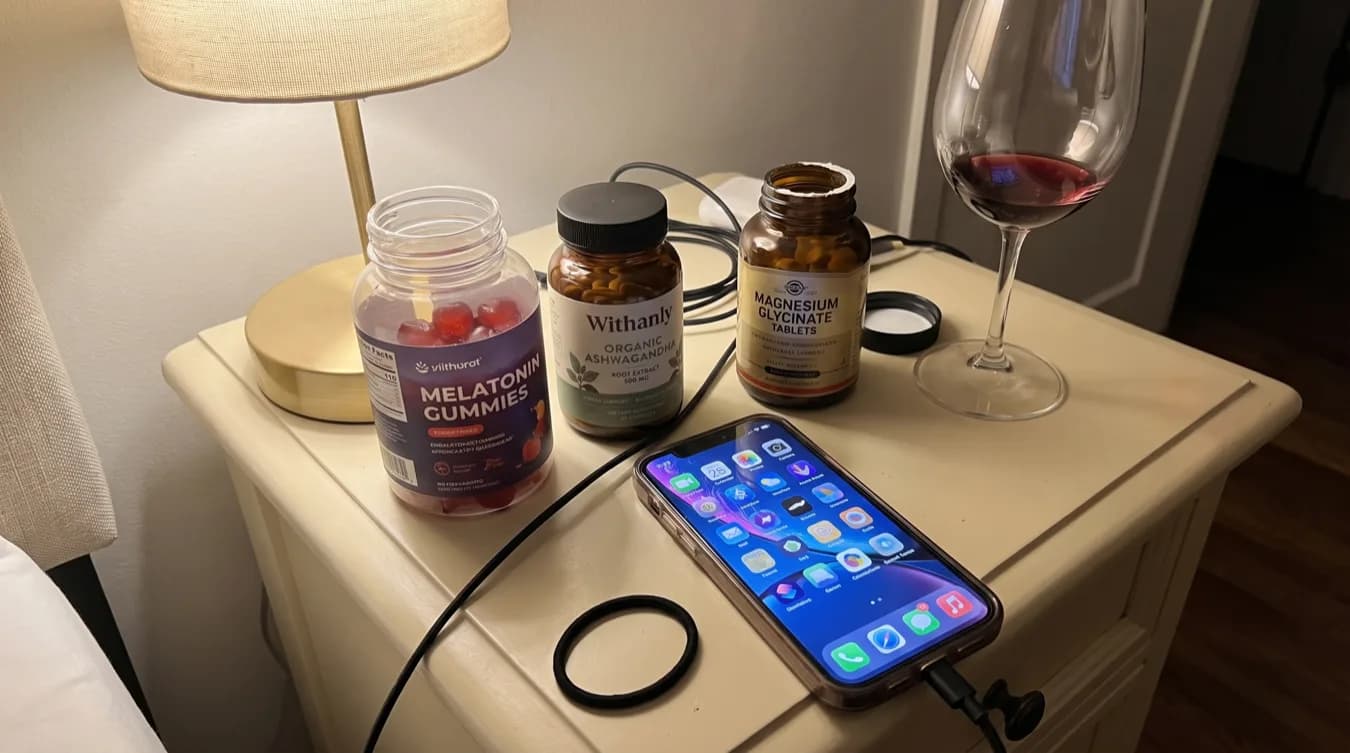
Melatonin gummies.Gets me to sleep. Doesn’t keep me there. The next morning my brain feels like wet sand.
Magnesium glycinate. The wellness internet swore by it. I took 400mg every night for two months. Nothing changed.
A glass of wine. Then two. Wine works for about ninety minutes, after which it wrecks the back half of sleep and the entire next day. The wine bottle was the symptom, not the solution.
Meditation apps. Headspace, then Calm, then Waking Up. I have started 30-day streaks in all three. I have never finished one. They do not survive a sick toddler.
My doctor told me to try yoga.
I tried yoga.
Then in February I read something that snapped a few things together.
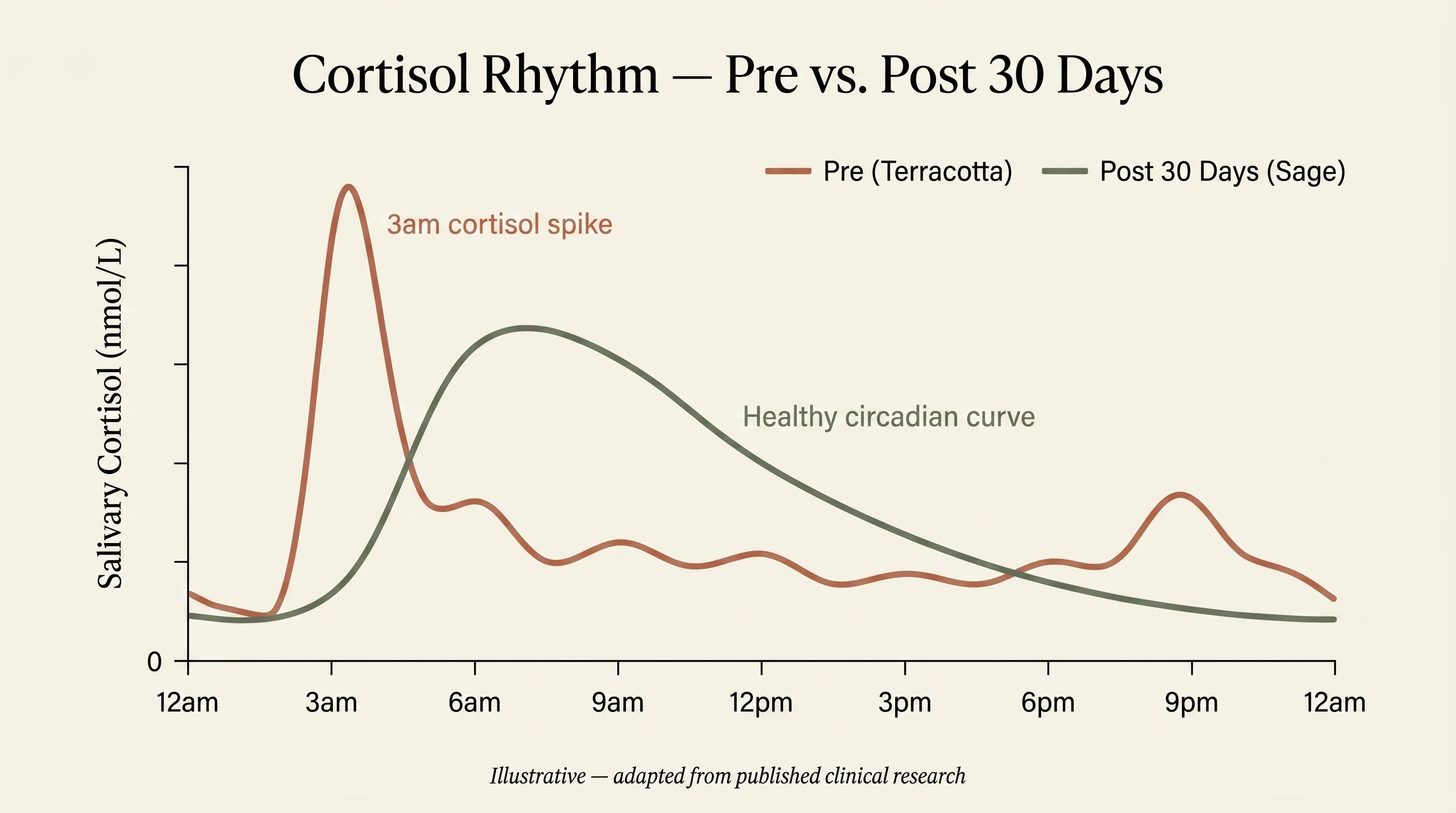
The 3am wake-up isn’t insomnia. It’s cortisol.
Cortisol is the alertness hormone — the thing that’s supposed to peak around sunrise, walk you up, then descend through the day so you can actually wind down at night. Mine wasn’t doing that. Mine had been stuck on since a Wednesday in 2021 — a launch week I never quite recovered from — and was firing at 3am as though my body still thought there was a 3:30am call I needed to be alert for.
That wasn’t an insomnia problem. That was a stress-response problem. And the supplement aisle had a different answer for it than the one I’d been buying.
The herb is called ashwagandha.
Withania somnifera.It’s been used in Ayurvedic medicine for around three thousand years. In the last twenty, modern research has started catching up — multiple human trials have looked at its role in supporting a healthy cortisol response, sleep quality, and what researchers politely call “perceived stress.”
It doesn’t sedate you. It’s not melatonin. It doesn’t put you under. What it does — gradually, over weeks, not minutes — is help your body remember the stress- response baseline it used to have. The fancy word is adaptogen. The plain-English word is settling.
A short note on why the 3am wake-up gets stuck. The HPA axis — hypothalamus, pituitary, adrenal glands — runs on a feedback loop. When you’re chronically stressed, the feedback signal that’s supposed to turn cortisol offgets blunted. The adrenal glands keep firing past when they should. The 3am spike isn’t random; it’s a feedback loop that learned to fail. Adaptogens appear to help the loop re-sensitize. That’s the “remembering” part.
In peer-reviewed randomized controlled trials, standardized ashwagandha root extract has been studied for its role in supporting a healthy cortisol response, perceived stress, and sleep quality in adults under chronic stress — with outcomes measured across weeks of daily use, not overnight. See the References below; individual results vary and are not guaranteed.
Two things matter when you actually go to buy it.
One: the root.Most cheap supplements use a leaf or stem extract because it’s cheaper to source. Quality formulas use the whole root, organic, single-origin.
Two: absorption.Ashwagandha is fat-soluble and bioavailability is patchy on its own. Quality formulas pair it with black pepper extract (the active compound is piperine), which substantially lifts absorption. That’s why every honest supplement on the market includes a few milligrams of black pepper.
After two weeks of comparison-shopping, I picked Withanly.
Specifically because of the spec sheet:
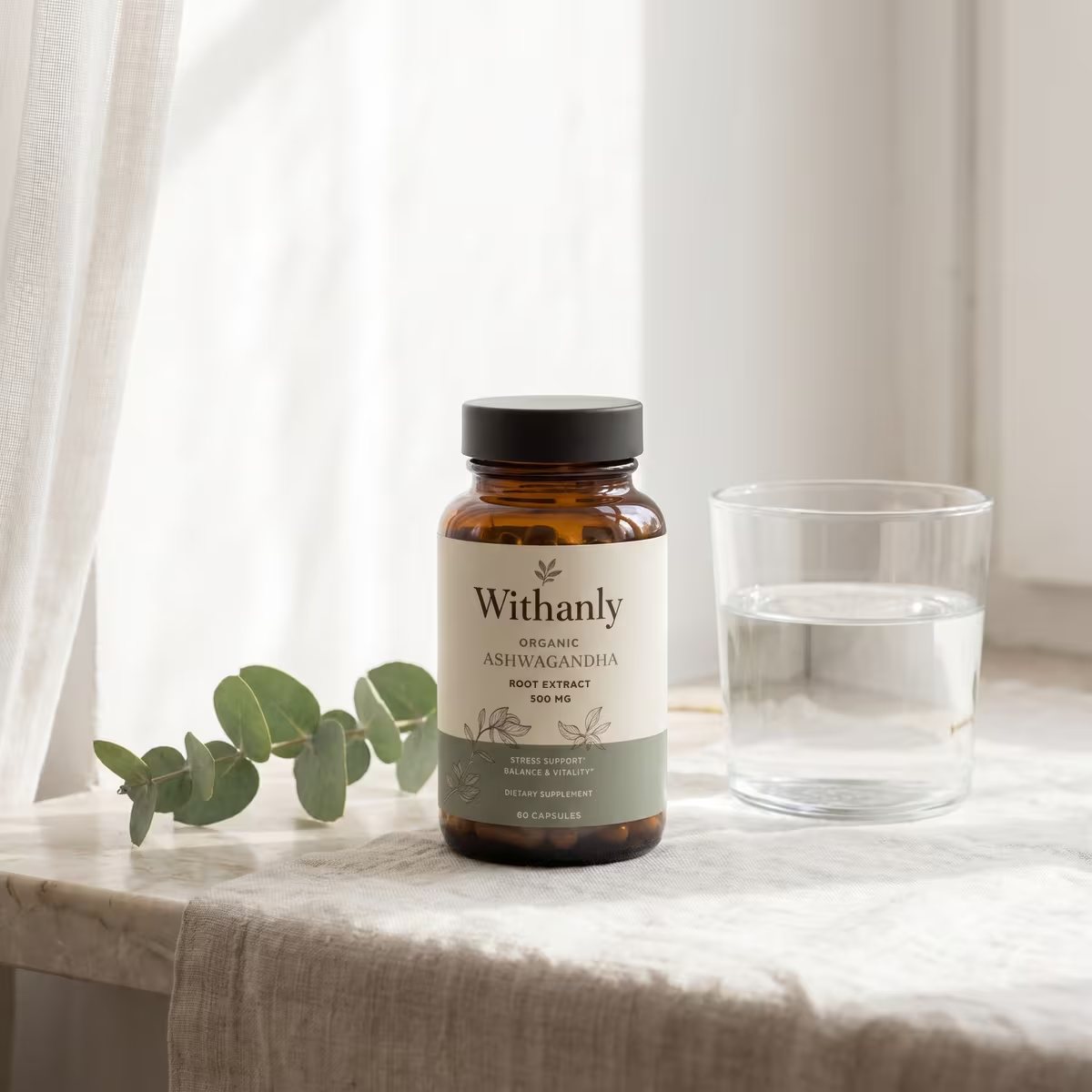
- 650mg of organic ashwagandha root per capsule — whole-root, single-origin from one Indian farm.
- 5mg of black pepper extract per capsule, for absorption.
- 60 vegan pullulan capsules per bottle (2 a day = 30-day supply).
- Organic root. No fillers. No flow agents. No proprietary-blend nonsense.
- Bottled in the USA (GMP-certified).
The packaging — sage and cream — was the tip-off. This wasn’t a “stack this with rhodiola and crush your day” supplement. This was a bottle I could put on my actual nightstand without hiding it in a cabinet.
Free US Shipping · 30-day money-back guarantee
What 30 days actually looked like.
Week 1 — Nothing.
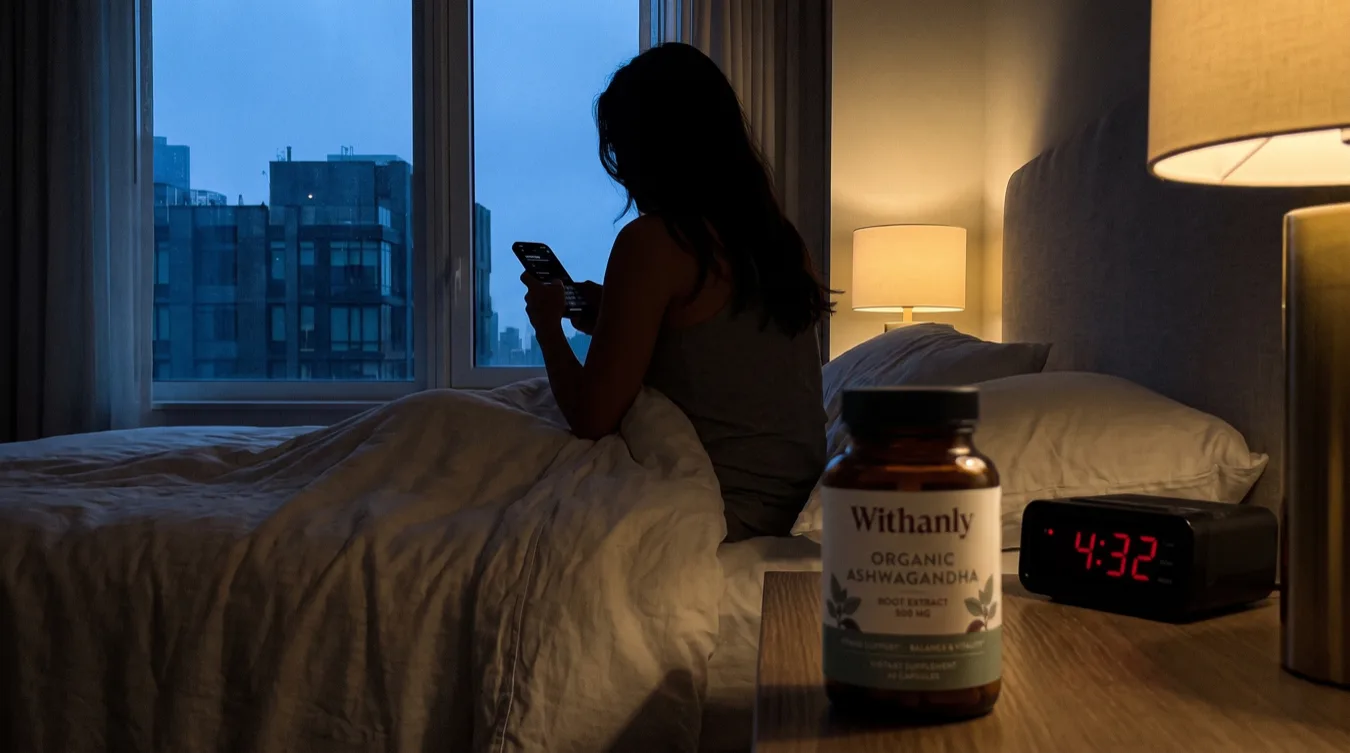
I’d been warned. Ashwagandha isn’t a hit, it’s a settling. Most people don’t feel anything for 7–10 days. I felt nothing. I also, on day 5, slept until 4:30am instead of 3:17am — which I noticed, then forgot, then noticed again on day 8 when it happened a second time.
Week 2 — Something.
Hard to describe. Less a feeling than an absence. My husband asked me on a Tuesday why I hadn’t snapped at the dishwasher. I hadn’t noticed I hadn’t. The Whole Foods parking-lot crying — Friday came and went, no crying. I noted it in my Notes app and then forgot about it.
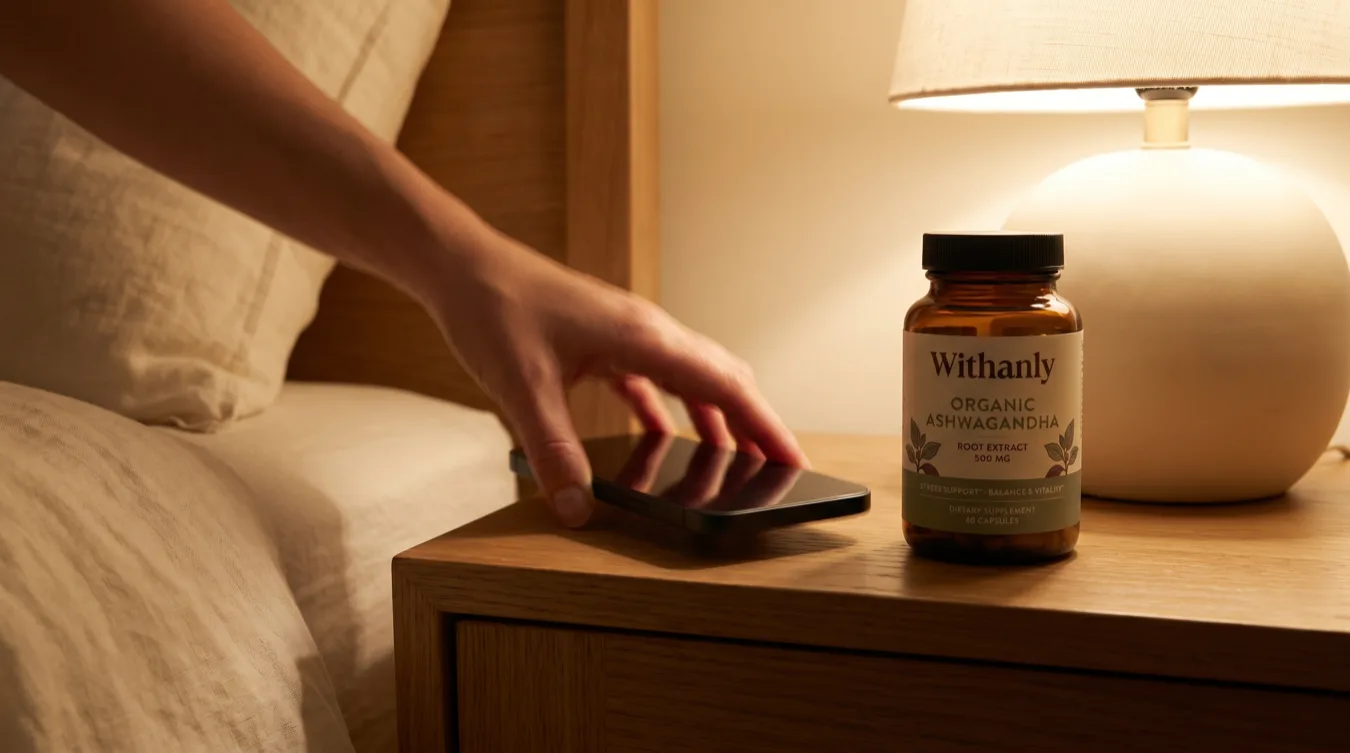
Week 3 — The thing.
Wednesday, week 3, I slept through the night. The whole night. I woke at 6:15 to a Slack notification, the way I’d woken every morning for nine years, except that I’d slept seven full hours without surfacing. I lay there for a minute trying to figure out what was different. Then I got up.
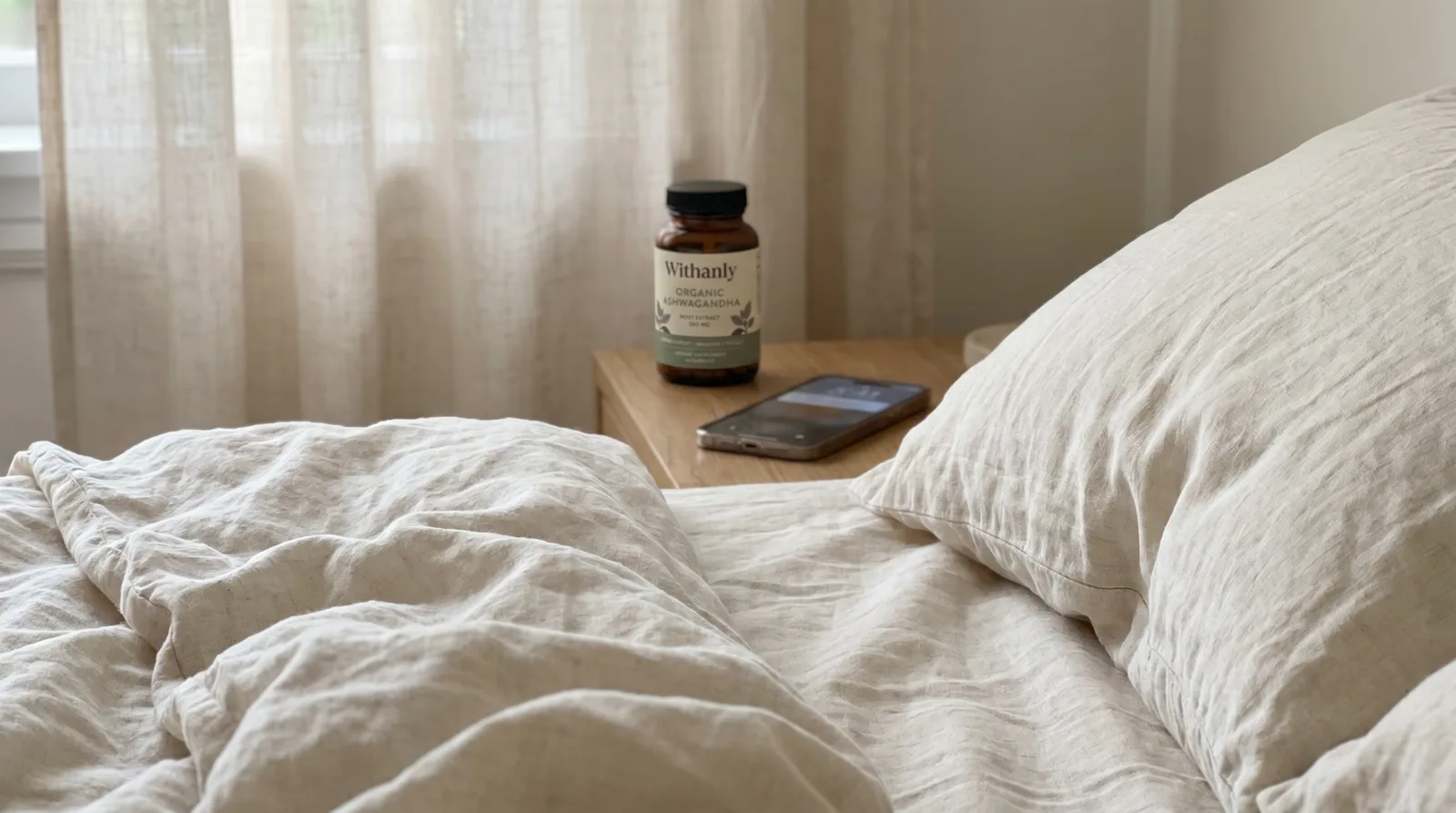
Week 4 — A baseline.
By the end of the month my mornings weren’t a recovery from the night. They were just mornings. The 3am wake-ups got rarer, and when they happened — once or twice a week — they didn’t carry the same charge. My nervous system, instead of running a tab of every failed action item at 3:17am, was just lying there. Quiet.
It wasn’t a miracle. It was a settling. I want to be honest about that. I still have stressful weeks. I still occasionally wake at 3am during the launch month of a big release. But the baseline shifted, and the baseline is what I needed.
30-day guarantee · Free US Shipping
The arc above isn’t isolated.
The composite case study above is built from dozens of pre-launch tester reports. Four of those testers, by name, with the quotes that ship on the product page:
“I finally stop worrying about every little mistake.”
“Helps me feel calmer and sleep better. I take one capsule before bed and noticed better mood and deeper sleep within a week.”
“Feel very calm and so at ease especially when things get stressful at work or driving in heavy traffic.”
“It keeps me calm and enhances my mood at home and at work. I have more patience with people.”
Pre-launch tester feedback gathered during product research. Individual results vary; results are not guaranteed. Statements have not been evaluated by the FDA and are not intended to diagnose, treat, cure, or prevent any disease.
Hero bundle 3-pack · $22.67 a bottle · two bottles free
Five things people ask when I tell them about this.
“Isn’t this just another supplement?”
Maybe. I have a drawer full of supplements that did nothing. This one did something — gradually, over weeks, the way the marketing said it would. I’d rather hear that than be promised a miracle.
“What about side effects?”
A small subset of people report mild GI adjustment in the first week and (rarely) a libido dip. Don’t take ashwagandha while pregnant or breastfeeding, and check with your doctor if you’re on prescription anxiolytics.
“Why does it cost more than the Amazon brand?”
Because it’s single-origin organic root paired with black pepper extract (piperine). You can buy a cheaper version. I did, twice, before this one. If “fine and cheap” is the priority, Nutricost works. If you want a bottle you don’t have to hide, this is one of them.
“How long does it take?”
Most people notice baseline shifts in week 2. Sleep tends to soften in week 3 or 4. If you’re not feeling anything by week 6, send the bottle back. They refund. Full stop.
“Will it make me drowsy at work?”
It didn’t make me drowsy. It made me settled. There’s a difference. You should still feel sharp. You should just feel less wound.
The math.
A weekly therapy session is $180–$250. A month of melatonin + magnesium + L-theanine + the Calm app subscription is a hundred bucks easy. A glass of wine every night to come down is more.
One bottle of Withanly is $34 for a 30-day supply.
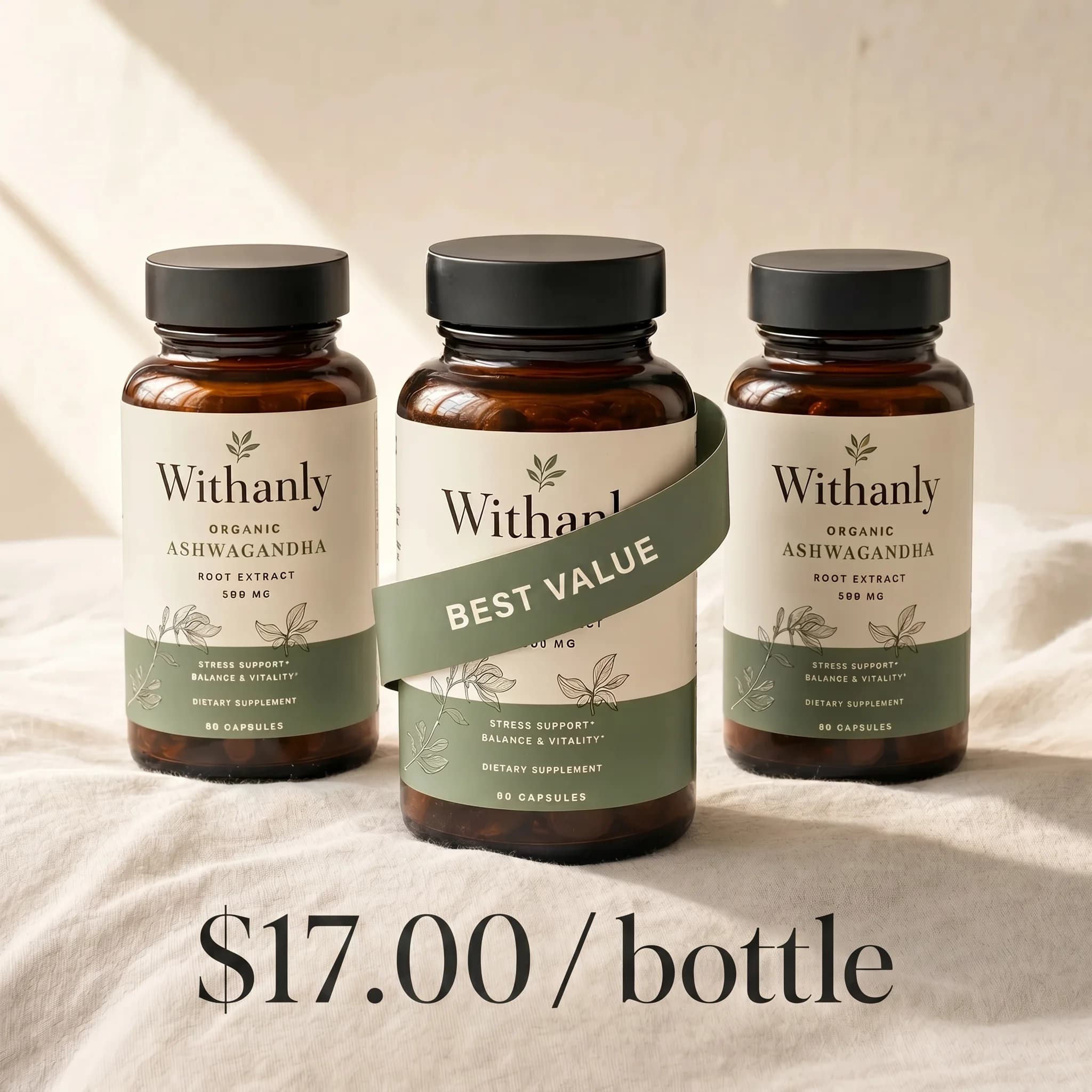
If you want to actually test it, the 3-pack is what most people start with — three bottles, ninety days. That’s where you find out whether it’s working for you.
The 3-pack is $68 (effectively $22.67 per bottle, two bottles free). Free US shipping. 30-day money-back guarantee. No subscription required (though there’s one if you want it locked in).
USDA Organic
Ashwagandha root
GMP-Certified
USA facility
Vegan
Pullulan caps
Single-Origin
Traceable root
30-Day Guarantee
Risk-free
A 20-second check
When does your sleep actually break?
No email required · Free US shipping · 30-day money-back guarantee
P.S.If you’re reading this at 3am: you’re not alone. Most of the testers who sent us notes like the one above were reading something similar in the same hour. Try Withanly for three weeks — that’s a fair test. If it doesn’t shift the baseline, keep the bottle and email us — no return needed. The 30-day money-back guarantee is the most reasonable test condition in the category.
— Withanly Journal Editorial
See the editorial framing block at the top of this article for the full disclosure on how this composite first-person account was constructed. Statements have not been evaluated by the FDA and are not intended to diagnose, treat, cure or prevent any disease. Always consult a qualified healthcare provider before adding a supplement to your routine — particularly if you are pregnant, breastfeeding, or taking prescription medication.
References
- 1.Chandrasekhar K, Kapoor J, Anishetty S (2012). A prospective, randomized double-blind, placebo-controlled study of safety and efficacy of a high-concentration full-spectrum extract of ashwagandha root in reducing stress and anxiety in adults. Indian J Psychol Med. 34(3):255–262. PMID: 23439798
- 2.Salve J, Pate S, Debnath K, Langade D (2019). Adaptogenic and Anxiolytic Effects of Ashwagandha Root Extract in Healthy Adults: A Double-blind, Randomized, Placebo-controlled Clinical Study. Cureus. 11(12):e6466. PMID: 32021735
- 3.Langade D, Kanchi S, Salve J, Debnath K, Ambegaokar D (2019). Efficacy and Safety of Ashwagandha (Withania somnifera) Root Extract in Insomnia and Anxiety: A Double-blind, Randomized, Placebo-controlled Study. Cureus. 11(9):e5797. PMID: 31728244